

40ft Containers, Refrigerated Containers, Refrigerated Containers for sale, Storage Containers for Sale
40ft Refrigerated Non-Working Container — Used
$3,100.00


40 Feet Freezer Container | Mobile Cold Storage Unit (-40°C) This 40-foot reefer container provides a self-contained, mobile cold storage solution.
Shown in United States Dollar. Delivery quoted separately by location.
For 40ft Refrigerated Freezer Container — Used
A freezer 40ft refrigerated container in used condition — in service and structurally sound. Chosen for temperature-controlled storage and transport. Every unit is inspected before it leaves our yard, so the grade below is what you will actually receive.
This 40ft refrigerated shipping container, commonly called a 40ft reefer container, provides a self-contained cold-storage environment that can be deployed where permanent refrigeration infrastructure is unavailable or additional capacity is needed.
The container combines an insulated high-cube structure with an integrated refrigeration unit, allowing temperature-sensitive goods to be stored in a controlled environment. It can be used as additional cold storage at a food-processing facility, distribution center, farm, fishery, catering operation or industrial site, subject to the requirements of the goods being stored.
Unlike a conventional dry shipping container, a reefer is purpose-built around temperature control. Its insulated walls, roof and floor help limit heat transfer, while the refrigeration system circulates cold air throughout the cargo space. This makes it particularly useful where maintaining a consistent storage temperature matters.
Wide temperature range: Depending on the installed refrigeration equipment and its operating condition, the unit can be configured for temperatures from approximately +30°C down to -40°C, covering chilled and deep-frozen storage requirements.
Integrated refrigeration system: The refrigeration machinery is mounted directly to the container, creating a self-contained cold-storage unit that can be transported and deployed at suitable locations.
High-performance insulation: The insulated container body is designed to reduce heat transfer and maintain the internal environment more efficiently than a standard steel storage container.
Temperature control: A microprocessor-based controller manages the refrigeration system and provides temperature information through the installed control interface.
Remote monitoring capability: Depending on the refrigeration unit fitted to the container, telematics or remote-monitoring systems may be available for tracking operating conditions and temperature data.
Tough refrigerated floor: The reefer floor is designed for cold-storage applications and palletised cargo, with aluminium T-floor sections supporting airflow beneath stored goods.
Portable cold storage: The ISO container format allows the unit to be transported, positioned and relocated using appropriate container-handling equipment.
A refrigerated container works differently from a standard shipping container. Instead of simply protecting its contents from the weather, the reefer creates an actively controlled internal environment.
The refrigeration unit removes heat from the cargo space while the insulated container body helps prevent outside heat from entering. Air is circulated through the interior to distribute the conditioned air around the stored goods.
This combination of active refrigeration and thermal insulation makes a reefer suitable for chilled and frozen products that cannot be safely stored in an ordinary container.
For businesses that need additional cold-room capacity, a 40ft reefer can also provide an alternative to constructing a permanent refrigerated building. It arrives as a self-contained unit and can be positioned at a suitable site with the required electrical supply and operating conditions.
The 40ft reefer is built around an insulated high-cube shipping container structure with refrigeration machinery mounted at one end. The insulated enclosure is designed to minimise heat gain, while the refrigeration system maintains the selected operating temperature.
The interior uses refrigerated-container construction rather than the plywood floor found in a standard dry container. T-shaped aluminium floor sections provide a durable surface for palletised cargo while creating channels that help cold air circulate through the cargo area.
The refrigeration system is controlled through a dedicated electronic controller. Depending on the specific machinery installed, the controller can provide temperature readings, operating information, alarms and data-logging functions. Some refrigeration systems can also be connected to remote-monitoring or telematics platforms.
The reefer can therefore form part of a wider cold-chain operation, provided the refrigeration equipment, power supply and operating conditions are appropriate for the products being stored.
Container size: 40ft High Cube refrigerated container
External dimensions: approximately 40 ft L × 8 ft W × 9 ft 6 in H (12.2 × 2.44 × 2.9 m)
Typical internal temperature range: approximately -40°C to +30°C (-40°F to +86°F), depending on the refrigeration system and operating conditions
Power supply: typically 400/460V AC, three-phase, 50/60 Hz; confirm the exact electrical requirements of the installed refrigeration unit before connection
Refrigeration system: Integrated reefer refrigeration unit
Typical refrigerant: Depending on the refrigeration machinery, R452A, R404A or another specified refrigerant may be used. The exact refrigerant should be confirmed for the individual unit.
Controller: Microprocessor-based refrigeration controller, such as an MP4000 or equivalent, depending on the installed equipment
Insulation: High-performance polyurethane foam insulation
Floor: Refrigerated aluminium T-floor system
Container structure: ISO-style high-cube refrigerated container
Important: Refrigeration specifications can vary between manufacturers and individual reefer units. Confirm the exact model, refrigerant, electrical requirements, temperature range and operating condition of the available unit before purchase.
The internal dimensions are approximately 39 ft 5 in long × 7 ft 8 in wide × 7 ft 10 in high, providing around 2,390 cubic feet of internal volume before accounting for the refrigeration equipment and any cargo-handling requirements.
Because refrigerated containers have thicker insulated walls than standard dry containers, their internal dimensions and usable volume differ from those of conventional 40ft shipping containers. Exact measurements vary between manufacturers and refrigeration designs.
The rear cargo doors provide access for loading and unloading pallets, cartons, crates and other suitable goods. The actual usable capacity depends on the type of cargo, packaging, pallet configuration and required airflow around the products.
Frozen food: Suitable for applications involving frozen meat, seafood, processed foods and other products requiring controlled low-temperature storage, subject to the product's required temperature and applicable food-safety procedures.
Agricultural products: A reefer can provide temporary or additional cold-storage capacity for farms, packhouses and agricultural distribution operations.
Seafood and fisheries: The controlled environment can support cold-chain operations at fisheries, processing facilities and distribution points.
Dairy and chilled products: Depending on the required storage temperature, a reefer can provide additional chilled capacity for suitable dairy ingredients and other temperature-sensitive products.
Catering and events: Mobile refrigerated storage can be useful for large events, catering operations and temporary food-service facilities where additional cold capacity is required.
Industrial materials: Some temperature-sensitive industrial products may require controlled storage. Always confirm the manufacturer's required temperature, ventilation and compatibility conditions before using a reefer for chemicals, adhesives or other industrial materials.
1 × 40ft High Cube refrigerated container
1 × Integrated refrigeration unit
1 × Digital refrigeration control system
Internal refrigerated-container floor
Integrated temperature-control equipment
The exact refrigeration model, controller, refrigerant and additional equipment supplied can vary between individual units. These details should be confirmed with the available container before purchase.
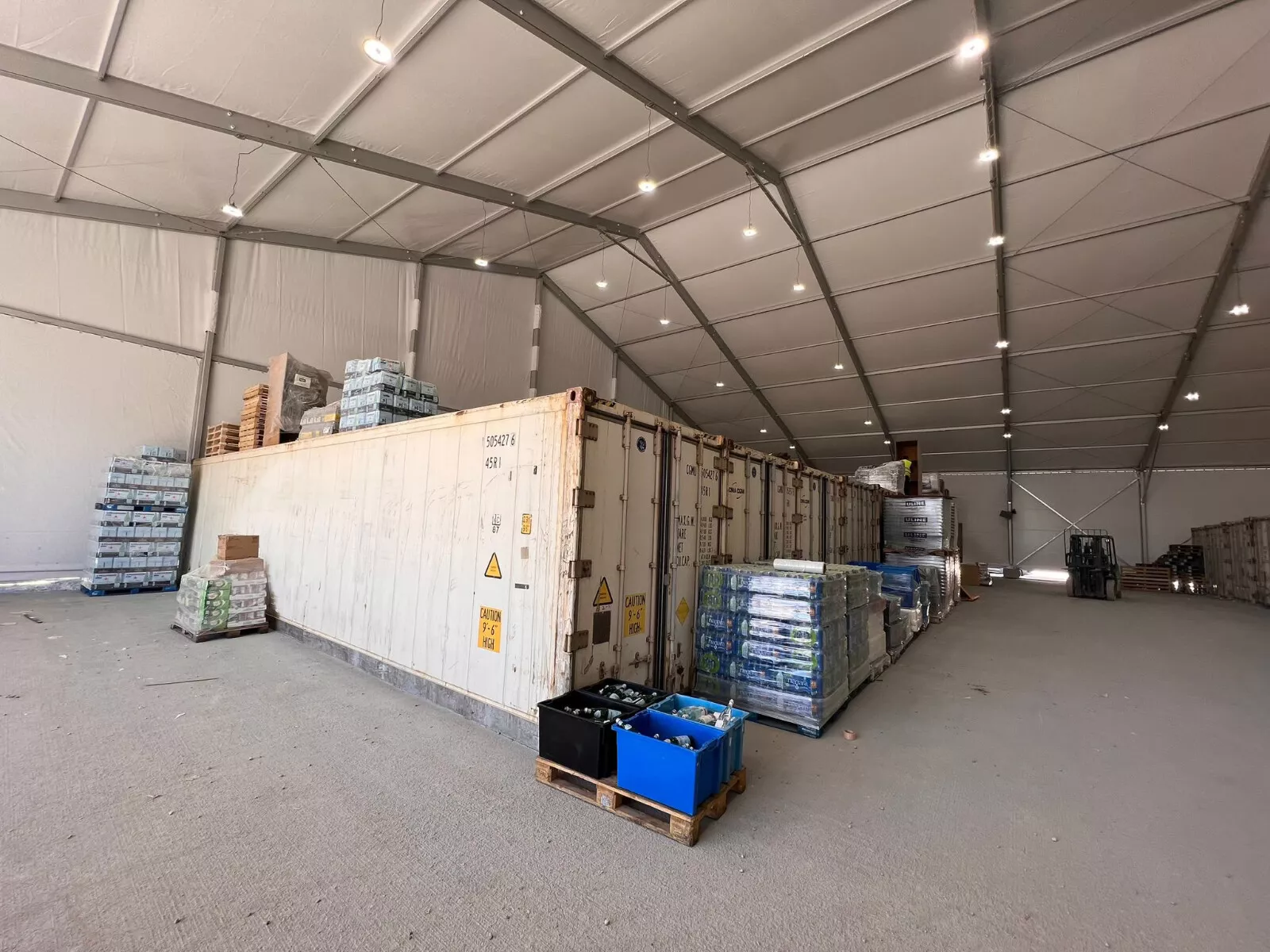
This is a used refrigerated container that has been in service. It is structurally sound and described as wind and watertight, with an intact roof, working door seals and no holes.
As a used reefer, it may show evidence of previous operation and handling. Surface rust, dents, scratches, paint wear and previous owner markings can be present and are normal characteristics of a used container.
The refrigeration machinery is a critical part of the product, so its operating condition should be confirmed for the specific unit. Every container is inspected before dispatch, and the available condition and equipment details can be confirmed before you commit to the purchase.
A used reefer can be a practical way to add refrigerated storage without the cost and construction time associated with a permanent cold room. The insulated container structure and integrated refrigeration system are already in place, allowing the unit to be deployed at a suitable location once the required power and site conditions are available.
It can also provide valuable flexibility for businesses with seasonal demand. Additional cold-storage capacity can be added when required and potentially relocated as operations change.
For buyers, the important consideration is not simply the container's exterior condition. The refrigeration unit, controller, insulation, door seals, floor, electrical system and temperature performance all matter. That is why the condition and equipment specification should be reviewed before purchase.
If you intend to use the reefer for international cargo transport, the applicable container certification and documentation should be confirmed before purchase. The International Maritime Organization's Convention for Safe Containers provides the international framework for container safety requirements.
For information about container inspection practices and industry standards, the Institute of International Container Lessors provides useful industry guidance. A refrigerated container used as stationary cold storage should not automatically be assumed to have all certification required for international shipping.
Refrigerated containers require a suitable electrical supply to operate the refrigeration machinery. Many 40ft reefers use a three-phase 400/460V supply, but the exact requirement depends on the refrigeration unit installed.
Before delivery, make sure the intended site has an appropriate electrical connection and that the available power supply matches the reefer's specification. Incorrect electrical supply can prevent the refrigeration system from operating correctly and may damage equipment.
Delivery is quoted according to your site rather than offered as a standard flat rate. Haulage costs depend on the delivery distance, road approach, placement area and whether a crane or other lifting equipment is required.
A 40ft high-cube reefer is larger and heavier than a standard dry container in some configurations, so site preparation and access should be considered carefully. The delivery route needs to provide sufficient clearance for the transport vehicle and the container's overall height.
The container should be positioned on a suitable, stable surface with enough clearance around the refrigeration machinery for servicing and airflow. We confirm delivery requirements and pricing before dispatch.
What is a 40ft reefer container?
A 40ft reefer is a refrigerated shipping container designed to maintain a controlled internal temperature. It combines an insulated container body with an integrated refrigeration system.
Can this reefer reach -40°C?
The listed configuration is designed for deep-freeze operation down to approximately -40°C. Actual performance depends on the specific refrigeration unit, operating conditions, cargo, ambient temperature and maintenance condition. Confirm the tested operating range of the individual unit before purchase.
What power does a 40ft refrigerated container need?
Many reefer units require a 400/460V three-phase electrical supply at 50/60 Hz, but requirements vary by refrigeration model. Always confirm the exact electrical specification of the unit before installation.
Can I use a reefer as a cold room?
Yes. A refrigerated container can provide a self-contained cold-storage environment when installed on a suitable site with the correct electrical supply and operating conditions.
Can a reefer container be used for frozen food?
Yes, provided the refrigeration system can maintain the temperature required by the specific product and the container is operated in accordance with applicable food-safety and cold-chain procedures.
Can I store chemicals in a refrigerated container?
Some temperature-sensitive industrial materials may be suitable, but chemical compatibility and the manufacturer's storage requirements must be confirmed before use. A reefer should not be assumed to be suitable for every chemical product.
Is this a new or used refrigerated container?
This is a used reefer that has been in service. It is structurally sound and wind and watertight, but normal signs of previous use such as dents, surface rust and paint wear may be present.
Can the refrigeration unit be monitored remotely?
Some refrigeration systems support telematics and remote monitoring, depending on the controller and equipment installed. The exact capability should be confirmed for the individual reefer.
Can I move the reefer to another location?
Yes. The container format is designed for handling and transportation with suitable equipment. The destination site must have adequate access, a suitable placement surface and the electrical infrastructure needed to operate the refrigeration system.
Explore more options in our 40ft Containers category, or browse the full container catalogue to compare refrigerated and standard container options.
Internal dimensions are approximately 39 ft 5 in × 7 ft 8 in × 7 ft 10 in (12,032 × 2,350 × 2,393 mm), giving 2,390 cu ft (67.7 m³) of usable space, with double doors at one end. These are the standard figures for a 40ft container; exact internals vary slightly by manufacturer.
This is a used container that has been in service. It is wind and watertight — no holes, working door seals, an intact roof — but it shows its history: surface rust, dents and previous owner markings are normal and do not affect how it performs.
This unit is commonly used for temperature-controlled storage and transport. Doors, windows, insulation, electrics and paint can all be added before it ships — it is cheaper and neater to specify a conversion while the container is still in our yard than to modify it on your site afterwards.
Browse more in 40ft Containers, or see the full container catalogue.
Containers intended for international shipping carry a valid safety approval plate under the Convention for Safe Containers, administered by the International Maritime Organization. Condition grades such as cargo-worthy follow the inspection criteria published by the Institute of International Container Lessors. If you need a unit for shipping rather than static storage, tell us and we will confirm its plate before dispatch.
Delivery is quoted against your site access rather than published as a flat rate, because haulage for a container depends on the distance, the approach and whether a crane is needed. Most deliveries use a tilt-bed truck, which needs a clear and reasonably level run about twice the container length. We price it before you commit.
40ft Containers, Refrigerated Containers, Refrigerated Containers for sale, Storage Containers for Sale
 Sale
40ft Containers, Refrigerated Containers, Refrigerated Containers for sale, Up to -40° F Refrigerated Containers

40ft Containers, Refrigerated Containers, Refrigerated Containers for sale, Storage Containers for Sale
40ft Containers, Refrigerated Containers, Refrigerated Containers for sale, Storage Containers for Sale
No reviews yet. If you have bought this unit, yours would be the first — and the most useful thing on this page for the next buyer.